
LinkAngler: From Deliverability to Dollars: The ROI of Landing in the Inbox
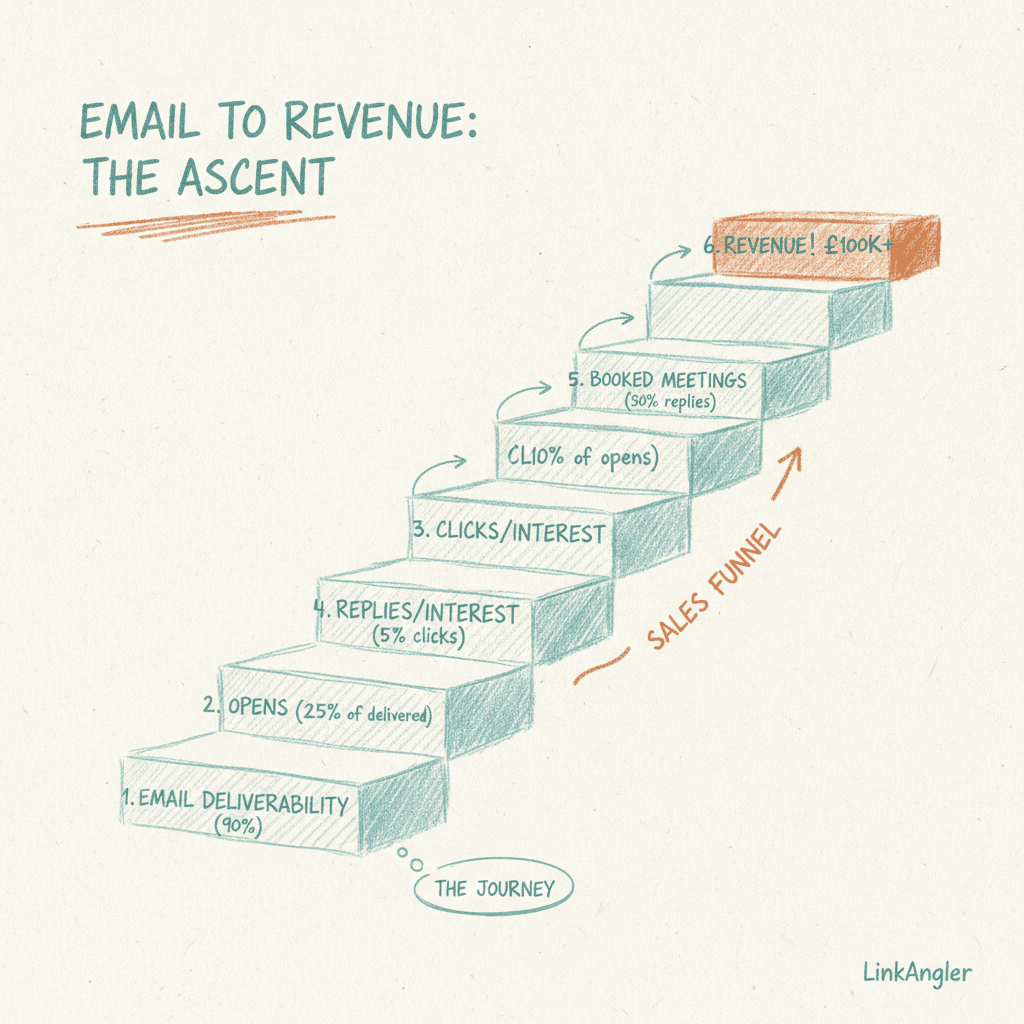
When I started LinkAngler, I spent a good ten years selling data and market intelligence. I saw a lot of sales teams. I saw a lot of "outreach strategies". And transparently, I saw a lot of wasted effort. People were spending hours every week crafting emails that often never even reached an inbox. It was like shouting into a void, then wondering why no one was replying.
That frustration, paying £400 a month for tools that promised the world but delivered capped accounts and endless manual checks, is why I built LinkAngler. I wanted to design a business around a 10-hour work week, not a 10-hour work day. The core idea is "10 hours to 10 seconds" – taking those tasks that gobble up your week and shrinking them down to the press of a button. But that only works if the system actually, reliably, produces results.
And in outreach, results start with one thing: email deliverability. It doesn't matter how brilliant your subject line is, how compelling your offer, or how perfectly you've segmented your list, if your emails are landing in spam folders or, worse, not even making it to the server. You're simply not going to book meetings. You're leaving money on the table.
The Hidden Cost of Poor Email Deliverability
Think about it. If you send 1,000 emails, and your deliverability rate is 70%, that's 300 emails that never even had a chance to be opened. Three hundred opportunities, gone. If those emails typically convert at 1% to a booked call, you've just lost three potential calls. And if each booked call has an average client value of, say, £2,500 (one client paying £200 a month for a year, for instance), you've lost £7,500 in potential revenue. Just from bad deliverability.
Most people focus on open rates and reply rates. Those are important, of course. But they're vanity metrics if your emails aren't reaching the primary inbox in the first place. It's like obsessing over how many people are listening to your radio show, while half your audience's radios are unplugged.
I test every automation on my own accounts first. If it doesn't create a real result, it gets killed. I refuse to fully automate things that don't sound human, like AI comments on other people's posts. Human review gates stay. But when it comes to the technicalities of getting your message seen, automation is not just helpful, it's essential for success.
What Actually Impacts Email Deliverability?
There are a few key factors that decide if your email lands in the inbox or the spam folder. Understanding these is the first step to ensuring your outreach isn't wasted.
- Sender Reputation: This is like your credit score, but for email. If you've been marked as spam a lot, or sent to invalid addresses, your score goes down. Internet Service Providers (ISPs) track this. A poor sender reputation is a death sentence for your outreach.
- IP Address Reputation: Similar to sender reputation, but for the server you're sending from. If you're sharing an IP with a spambot, you're in trouble.
- Content Quality: Spam filters are smart. They look for spammy words, excessive exclamation marks, all caps, and suspicious links. They also check for a balance of text to images.
- Authentication Protocols: SPF, DKIM, and DMARC. These are technical setups that prove your email is actually coming from you, not an imposter. Without them, your emails are red-flagged.
- Bounce Rates: Sending to non-existent email addresses tells ISPs you're not managing your list well, which damages your sender reputation. A high bounce rate is a clear sign to filters.
- Engagement: If people open, reply, and move your emails out of spam, that's a positive signal. If they delete them without opening, or mark them as spam, that's negative.
Ignoring any of these is like trying to drive with the handbrake on. You might move, but it will be slow, inefficient, and eventually, something will break.
The LinkAngler Approach: Ensuring Your Emails Land Where They Matter
When I say LinkAngler helps you get booked calls on autopilot, it means we've built the system to handle these technical complexities for you. Because, let's be honest, you didn't start your business to become an email deliverability expert. You started it to solve problems for your clients and generate revenue.
Here’s how we tackle it, so your outreach actually converts to meetings:
1. Multi-Mailbox Rotation and Warm-Up
One of the biggest mistakes people make is sending high volumes from a single, cold email address. That's a fast track to the spam folder. Imagine trying to run a marathon without warming up. Your email address needs to stretch its legs first.
LinkAngler uses multi-mailbox email rotation. This isn't just about spreading the load. It's about meticulously warming up each inbox over a 7-week ramp. We start with low volumes, mimicking human behaviour, gradually increasing activity. This builds a strong sender reputation for each email address in your pool. It tells ISPs, "Hey, this is a legitimate sender, not a spambot."
The benefit to you? Your emails actually land in the inbox, so more of them turn into replies and booked calls. No more shouting into the void. This strategy means you can scale your outreach significantly without tanking your email deliverability.
2. Automatic Email Verification and Data Enrichment
Sending emails to invalid addresses is a surefire way to damage your sender reputation. Before a single email goes out, LinkAngler automatically verifies email addresses. If an email is undeliverable, it's flagged and removed from the campaign, preventing bounces.
We also use data enrichment to ensure the contact information is as accurate as possible. It's not just about finding an email. It's about finding the right email for the right person. This means less wasted effort, higher engagement rates, and a cleaner sender history.
3. Human-First Messaging with a Quality Gate
Spam filters hate generic, template-driven messages. So do people. I built LinkAngler with the principle that nothing goes out that sounds like a robot. AI is used to craft genuinely personal messages, but crucially, there's an automatic quality gate that scores every message before it sends. It checks for tone, relevance, and originality.
This isn't just about sounding good. It's a key part of your email deliverability strategy. When messages are personal and relevant, recipients are less likely to mark them as spam. They're more likely to open them, reply, and even add you to their safe sender list. These are all positive signals that boost your sender reputation.
4. Smart Scheduling and Quiet Hours
Bombarding inboxes at odd hours or with too many messages in a short space of time looks suspicious. LinkAngler allows you to set "quiet hours" (a concept explored further in our glossary on quiet hours), ensuring emails are sent during business hours, when people are most likely to be active.
This human-like sending pattern further enhances your sender reputation and reduces the likelihood of being flagged. It's about respecting the recipient's inbox, which ultimately benefits your own.
5. Optimising for Engagement, Not Just Sends
The ultimate goal of email outreach isn't to send emails. It's to get replies and book meetings. LinkAngler's messaging auto-improves over time, learning what works and what doesn't. This isn't just about subject lines or body copy. It's about understanding which types of messages lead to positive engagement, which in turn feeds back into better email deliverability.
When your campaigns consistently generate positive replies and booked calls, ISPs see you as a legitimate, valuable sender. This positive feedback loop is crucial for long-term success.
The Numbers: How Better Deliverability Translates to Your Bottom Line
Let's revisit our earlier example.
If you send 1,000 emails:
- Without LinkAngler (e.g., 70% deliverability): 700 emails reach the inbox. If 1% convert to a booked call, that's 7 calls. At £2,500 average client value, that's £17,500 potential revenue.
- With LinkAngler (e.g., 95%+ deliverability due to warm-up, verification, quality gate): 950+ emails reach the inbox. With the same 1% conversion, that's 9.5 calls (let's say 9 or 10 calls). At £2,500 average client value, that's £22,500 - £25,000 potential revenue.
That's an extra £5,000 to £7,500 in potential revenue, every single time you run a campaign of that size. Just from ensuring your emails actually land where they're supposed to. And that doesn't even account for the improved reply rates you get from highly personalised, relevant messages.
This isn't theory. This is the difference between outreach that feels like a chore and outreach that fills your calendar. When I say LinkAngler's promise is "Booked Calls on Autopilot", it's because we've engineered the system to handle these foundational elements so you don't have to. You pay for booked calls, not software that gets your emails flagged. That's why I put pricing in terms of the results you get.
Actionable Steps for Improving Your Own Email Deliverability Today
Even if you're not using LinkAngler yet, you can start making improvements right now.
- Warm Up New Email Addresses: Don't blast out a campaign from a brand new email. Start slow. Send a few personal emails a day for a couple of weeks, gradually increasing volume.
- Clean Your Lists: Use a reputable email verification service before every campaign. Remove old or bounced addresses immediately.
- Set Up Authentication: Ensure your SPF, DKIM, and DMARC records are correctly configured for your domain. Your IT team or hosting provider can help with this.
- Avoid Spam Triggers: Review your email content for spammy words, excessive links, or overly promotional language. Keep it human. Keep it conversational.
- Monitor Your Reputation: Tools like Google Postmaster Tools can give you insights into your sender reputation. Keep an eye on it.
- Prioritise Engagement: Craft messages that encourage replies. The more people respond positively, the better your reputation.
You don't have a content problem. You have a repetition problem if you're sending the same bland messages that nobody reads. You don't have a lead problem. You have a deliverability problem if your perfectly targeted leads never see your message.
LinkAngler isn't just about saving you hours every week (though it absolutely does that, turning 10 hours of prospecting into 10 seconds). It's about ensuring those saved hours translate directly into a full calendar of qualified prospects. It's about making sure your outreach actually works.
If you're curious about how many hours your current process is burning and what that truly costs you, check out our free time audit calculator. It might surprise you how much more you could be gaining by focusing on what truly drives booked meetings, starting with solid email deliverability.